Retainer vs Clear Aligners – Which Is Right?
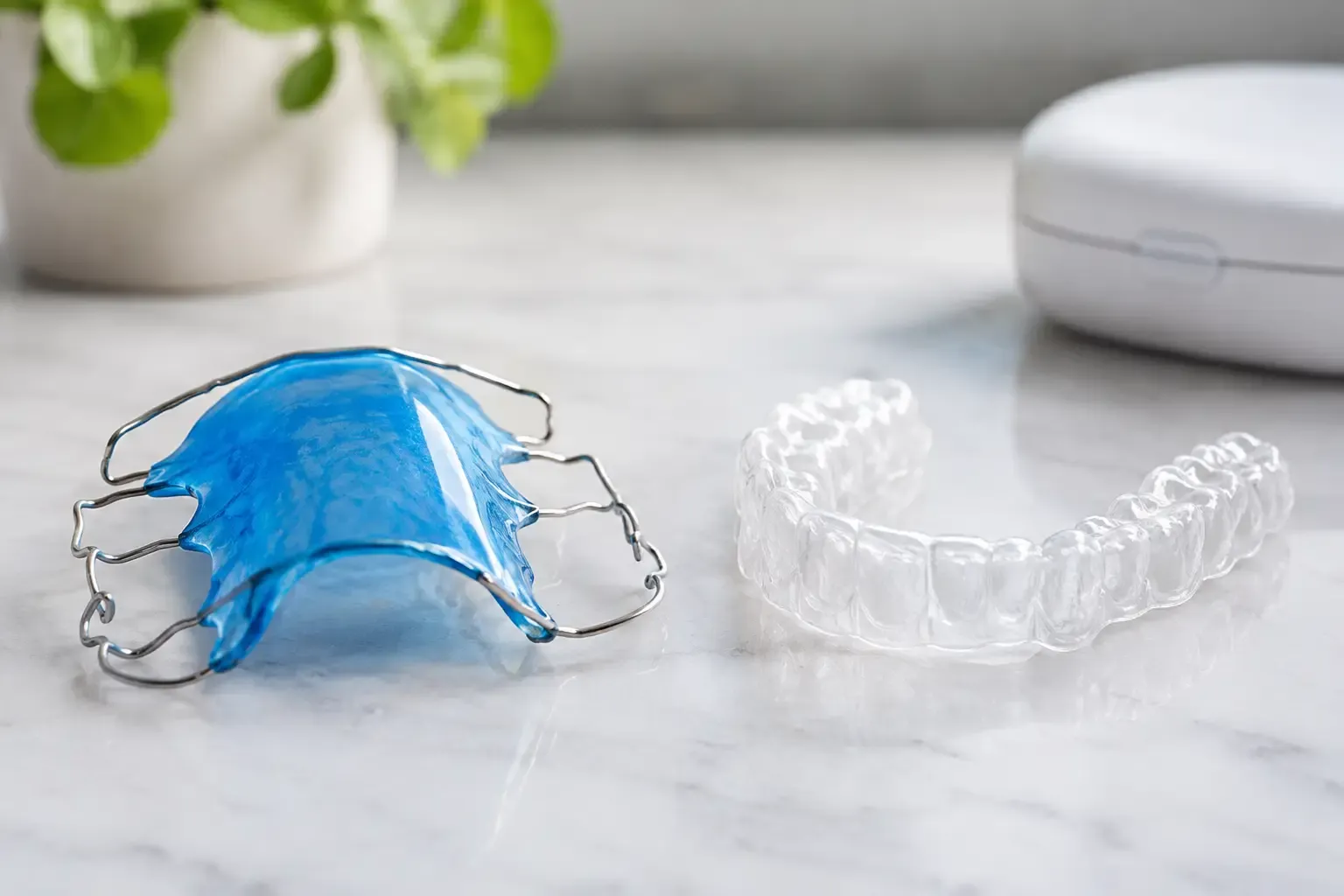
A clear plastic tray can look similar whether it is designed to straighten teeth or hold them in place. That is why the retainer vs clear aligners question causes understandable confusion. The difference is not simply the material. It is the purpose, the force applied to your teeth, and the treatment plan behind it.
If your teeth have shifted since orthodontic treatment, it can be tempting to wear an old retainer or order a tray online. However, teeth respond best to carefully planned movement. A dentist or orthodontist can determine whether you need to protect the smile you have, make a small correction, or begin a more comprehensive treatment.
Retainer vs Clear Aligners: The Key Difference
Clear aligners are active orthodontic appliances. They are made as a sequence of custom trays, with each tray designed to apply controlled pressure and move specific teeth over time. You typically change to the next aligner every one or two weeks, following the schedule set by your clinician.
A retainer is designed to maintain a result, not create one. After braces or aligner treatment, teeth have a natural tendency to drift toward their previous positions. Retainers help hold teeth steady while the surrounding bone and soft tissues adapt, and they remain valuable for protecting your result in the years ahead.
Both may be transparent and removable, but they should not be used interchangeably. A retainer that no longer fits comfortably is often a sign that teeth have moved. Forcing it into place can be painful and may place pressure on teeth in an uncontrolled way.
What Clear Aligners Can Treat
Clear aligners can be an excellent option for adults who want a discreet way to improve the position of their teeth. Depending on the case, they may address crowding, gaps, mild bite concerns, teeth that have rotated, and relapse after earlier orthodontic treatment.
The process begins with a detailed assessment. Digital scans, photographs, X-rays when needed, and an examination of your bite help your dentist plan treatment safely. Your aligners are then designed around your individual tooth movements rather than around a generic idea of a straight smile.
For many patients, the appeal is practical as well as cosmetic. Aligners are removable for meals and brushing, which makes daily hygiene easier than it can be with fixed braces. They are also nearly invisible from a conversational distance. That said, results depend on wearing them consistently, usually 20 to 22 hours a day.
Clear aligners are not the right answer for every orthodontic concern. More complex bite discrepancies, significant jaw-related issues, or certain tooth movements may be better managed with braces or a combined treatment approach. A clear explanation of these limits is part of responsible treatment planning.
Treatment Requires More Than Wearing Trays
The trays do the moving, but clinical supervision guides the outcome. Some patients need small tooth-colored attachments to give aligners a better grip. Others may need minor reshaping between teeth to create room for safe alignment. Refinement aligners are also common, allowing your dentist to fine-tune the final result.
This is why treatment time varies. Minor relapse may take only a few months, while more involved cases can take a year or longer. The best estimate comes after an examination, not from a photo or a one-size-fits-all promise.
When a Retainer Is the Better Choice
A retainer is appropriate when your teeth are already in the desired position and the goal is to keep them there. It is usually provided at the end of braces or aligner treatment, often as a clear removable retainer, a fixed wire bonded behind the front teeth, or a combination of both.
In the first stage after orthodontic treatment, your dentist may recommend wearing a removable retainer full-time, except when eating and brushing. Over time, many patients move to nighttime wear. The exact schedule depends on your starting position, the type of correction completed, your bite, and your clinician’s advice.
Retention is not an optional finishing touch. Teeth can shift throughout adulthood because of normal wear, changes in bite, grinding, gum health, and the natural forces of daily life. Wearing a retainer as recommended is the most reliable way to protect the time and investment you have made in your smile.
If you have lost or broken your retainer, arranging a replacement promptly is sensible. If it still fits fully and feels comfortable, it may be possible to make a new one based on your current tooth positions. If it does not fit, do not try to force it. You may need a short period of aligner treatment before a new retainer can be made.
Signs You May Need Aligners Instead of a Retainer
Small changes are easy to overlook until an old retainer feels tight or you notice a tooth in photographs. You may benefit from an orthodontic assessment if a retainer will not seat properly, a gap has opened, front teeth look crowded, your bite feels different, or you have stopped wearing retainers for several years.
The decision is not always all-or-nothing. For mild movement, a dentist may recommend a limited aligner plan focused on the teeth that have shifted, followed by new retainers. This can be a practical option for adults who had braces as teenagers and want to restore a smile they once liked.
Your gum health matters too. Teeth should not be moved without checking for active gum disease, untreated decay, or other concerns that could affect treatment. A healthy foundation supports a safer and more predictable orthodontic result.
Comfort, Care, and Everyday Practicalities
Both clear aligners and removable retainers require good habits. Clean them daily with a soft toothbrush and lukewarm water, or use a cleaner recommended by your dental team. Hot water can distort the plastic. Keep appliances in their protective case when they are not in your mouth, rather than wrapping them in a napkin where they can easily be lost.
With aligners, remove trays before eating or drinking anything other than water. Brushing after meals helps prevent staining and reduces the chance of trapping food or plaque against the teeth. Retainers also need regular cleaning, especially if worn overnight.
Some pressure is expected when starting a new aligner, and it usually settles within a few days. Retainers should feel secure but should not cause persistent pain. If an appliance cracks, becomes sharp, feels dramatically tighter, or no longer fits, contact your dental team rather than making adjustments yourself.
How to Make a Confident Choice
The simplest question is this: are you trying to maintain your current tooth positions, or change them? If your smile is where you want it to be, a retainer is the right tool. If teeth have moved and you would like to correct that movement, clear aligners may be the more appropriate route.
At The British Dental Clinic, treatment planning starts with listening to what you have noticed and what you would like to change. For international patients in Barcelona, clear communication matters just as much as clinical precision. You should understand what each option can achieve, how long it is likely to take, and what happens after treatment is complete.
A well-fitting retainer can preserve a result for years. If that result has already changed, a planned aligner treatment can help you move forward without guesswork. The most helpful next step is a professional assessment that gives you a clear, comfortable plan for the smile you want to keep.
Discover exceptional dental care in the heart of Barcelona
Book your appointment online in a few clicks, or message our reception team on WhatsApp.