How to Floss Implants Without Damaging Them
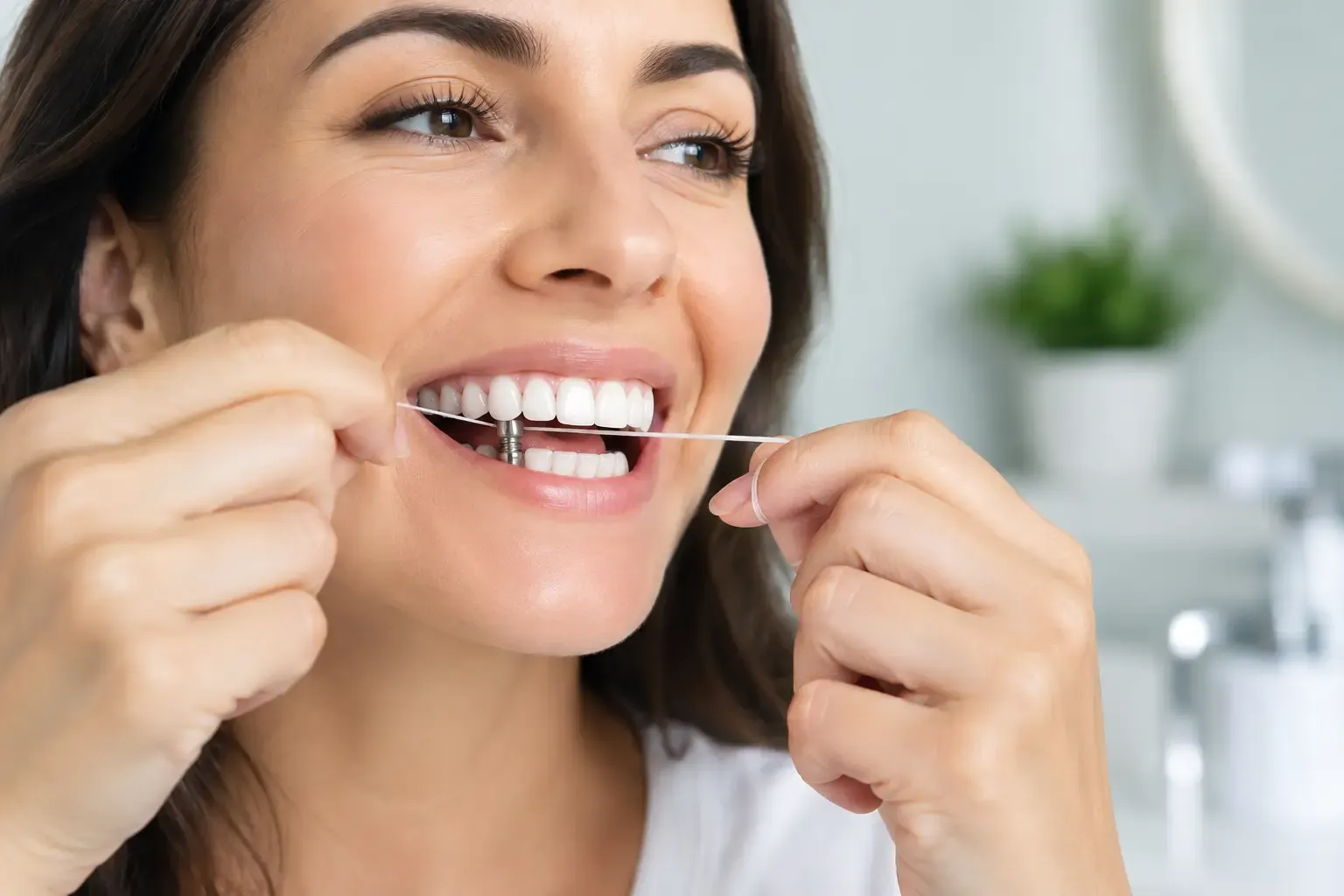
An implant may not decay like a natural tooth, but the gum and bone around it still need daily care. Knowing how to floss implants is one of the most practical ways to prevent inflammation around the implant and help protect the investment you have made in your smile.
The key is not aggressive flossing. It is removing plaque gently and consistently from the areas a toothbrush cannot fully reach, especially around the gumline and between an implant crown and the neighboring teeth.
Why flossing dental implants matters
A dental implant is a titanium post placed in the jawbone and topped with a crown, bridge, or denture. The crown itself cannot get a cavity. However, bacteria can collect where the restoration meets the gum, causing redness, bleeding, tenderness, and bad breath.
If this inflammation is limited to the gums, it is often called peri-implant mucositis. With early professional care and better home cleaning, it can usually be managed. If infection progresses and affects the bone holding the implant in place, it becomes peri-implantitis. This condition can threaten the long-term stability of the implant.
That is why a clean-looking implant crown is not the only goal. The goal is healthy tissue around it. Flossing helps disrupt the sticky bacterial film that builds up every day, particularly in the tight spaces that brushing alone may miss.
When can you start flossing after implant treatment?
Do not floss directly around a newly placed implant unless your dentist has told you it is safe to do so. During the early healing period, the surgical site needs to be protected. Your care instructions may include gentle rinsing, very soft brushing nearby, or a prescribed mouth rinse rather than floss.
The timing depends on the procedure. A straightforward implant placement, bone graft, gum graft, immediate temporary crown, or full-arch implant treatment can each have different aftercare needs. Once the gum has healed and your dentist confirms that the area can be cleaned normally, daily interdental cleaning becomes essential.
If you are unsure whether you are ready to floss, ask at your follow-up appointment. Clear instructions are particularly valuable when you have moved countries, had treatment while traveling, or are continuing implant care with a new dental team.
How to floss a single implant crown
For a single implant crown, use floss once a day, ideally at a time when you can be thorough rather than rushed. Many people find evening easiest because it removes the day’s buildup before sleep.
Choose unwaxed floss, implant-safe tape, or a soft floss designed to resist shredding. Traditional floss can work well for many implant crowns, but it should pass through the contact point smoothly. If it repeatedly catches or shreds, do not force it. This may indicate a rough edge on the restoration, excess bonding material, or a contact that needs adjustment.
Guide the floss gently between the implant crown and the tooth beside it. Do not snap it down onto the gum. Once it is below the contact point, curve it into a C-shape against one surface and move it up and down several times. Then clean the neighboring tooth surface before sliding the floss out carefully.
The most sensitive area is the gumline. You are not trying to push floss deeply beneath the gums. A gentle pass just below the edge of the gum is enough to remove plaque without causing trauma. Mild bleeding when you first improve your cleaning can happen if the gums are inflamed, but bleeding that continues beyond a week or two should be checked.
How to floss an implant bridge
An implant bridge needs a different approach because there is no open space directly between the replacement teeth. Plaque can collect underneath the bridge, especially where it meets the gum.
A floss threader or specialized bridge floss can help guide cleaning material beneath the false tooth portion of the bridge. Insert the firmer end through the space between the bridge and gum, pull the soft cleaning section through, then move it back and forth gently under the restoration. Follow the curve of the gum rather than sawing forcefully.
Super floss can be useful because it has a stiffened end, a spongy section for cleaning under a bridge, and regular floss for adjacent teeth. It is often easier to use than a separate threader, although the best choice depends on the shape of your bridge and the access available.
For a longer bridge, clean beneath each section where food and plaque can collect. This can take a little longer at first, but it becomes routine quickly. If it is difficult to pass cleaning material under the bridge, your hygienist can demonstrate the angle and tool that suit your restoration.
Should you use a water flosser around implants?
A water flosser can be an excellent addition to your implant care routine. It is particularly helpful around bridges, implants at the back of the mouth, orthodontic appliances, and areas where hand dexterity is limited. The stream can flush out food debris and reduce plaque around the gumline.
However, it is best viewed as an addition rather than an automatic replacement for floss or interdental brushes. Water flossers do not always clean the sides of teeth and implant crowns as directly as a properly used mechanical cleaner. For many patients, the most effective approach is a water flosser combined with floss, bridge floss, or appropriately sized interdental brushes.
Use a low-to-medium pressure setting to begin. Aim the stream along the gumline, pausing briefly around each implant and between teeth. There is no benefit to using a pressure level that feels painful or makes the gums bleed.
Interdental brushes: helpful, but only when correctly sized
Interdental brushes can be very effective around implant crowns when there is enough space between teeth. They are small, soft-bristled brushes that clean the sides of teeth and the area near the gumline.
Size matters. A brush that is too small will not clean effectively, while one that is too large can cause discomfort or damage delicate gum tissue. It should slide through with light resistance, never force. Your dentist or hygienist can recommend the correct diameter and show you whether a plastic-coated wire is preferable for your particular restoration.
Do not use toothpicks, sharp objects, or improvised tools to clean around implants. They can injure the gums, scratch the restoration, or simply push debris deeper into the area.
A simple daily implant-cleaning routine
A consistent routine is more valuable than buying every tool available. Brush twice daily for two minutes with a soft-bristled toothbrush and low-abrasive toothpaste. Pay close attention to where the implant crown meets the gum, using small, gentle circles rather than hard scrubbing.
Clean between teeth and around the implant once daily using the method suited to your restoration: floss for a single crown, a threader or bridge floss for a bridge, or an interdental brush where your dental professional has confirmed the fit. A water flosser can be used before or after these steps according to preference.
If you wear an implant-supported denture, cleaning needs can be more involved. Removable overdentures should usually be taken out and cleaned separately, while the attachment areas and gums beneath must also be cleaned carefully. Fixed full-arch bridges require access beneath the bridge, often using specialized floss or a water flosser. Personalized instruction makes a real difference with these restorations.
Signs you should not ignore
Contact your dentist if you notice persistent bleeding, swelling, pus, a bad taste, increasing sensitivity, pain when biting, or a feeling that the implant crown is loose. An implant should not feel mobile. Sometimes the crown or bridge is loose rather than the implant itself, but either way, it should be assessed promptly.
Do not stop cleaning because an area bleeds. Instead, clean gently and arrange an appointment if the bleeding persists. Avoiding the area allows plaque to build up, which can make inflammation worse.
Professional hygiene visits remain essential even when your home routine is excellent. Implant maintenance appointments allow your dental team to check the gums, bite, restoration, and bone levels, while using instruments appropriate for implant surfaces.
A few careful minutes each day can protect far more than the appearance of your implant. If any part of your routine feels difficult, uncomfortable, or confusing, ask for a personalized demonstration at your next visit. The right technique should feel manageable, gentle, and reassuring.
Discover exceptional dental care in the heart of Barcelona
Book your appointment online in a few clicks, or message our reception team on WhatsApp.